

Small-Scale Industrial’s Broad Appeal
This attractive niche sector can be a safer option for investors than larger assets.
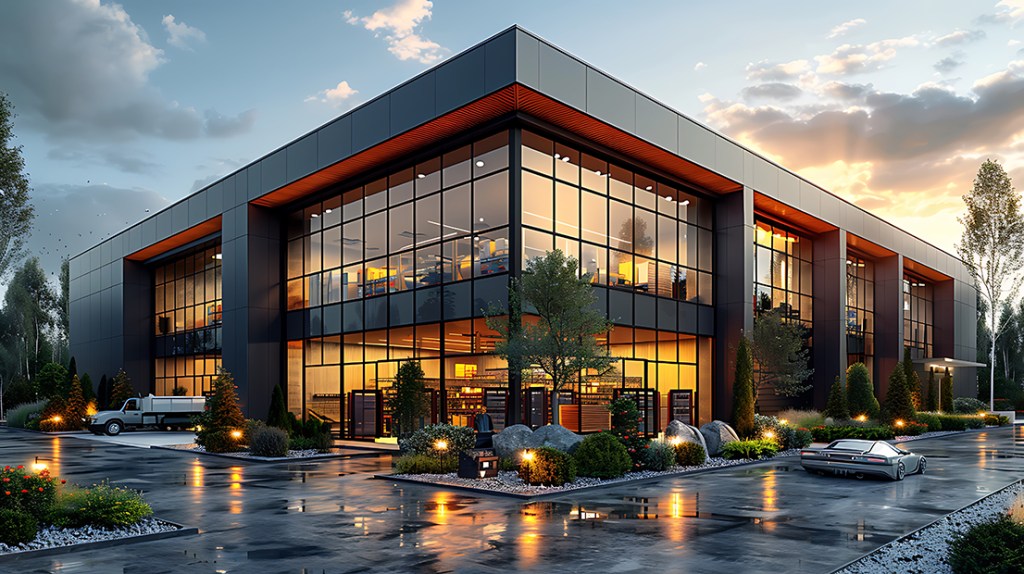
Demand for small-scale, shallow-bay industrial product is surging in dense, urban locations along with online shopping and expansion of small- and medium-size businesses that service local populations through the sale, distribution and or production of goods.
Solid rent growth, limited supply and low-vacancy rates have made shallow-bay industrial an attractive niche sector and, in some cases, a safer option for investors than larger-scale industrial real estate investments, especially in overbuilt markets like Indianapolis and Dallas-Fort Worth, noted James Breeze, CBRE vice president for global industrial and retail research.
“It is not as institutionally owned as bulk industrial so there are more opportunities to purchase from owners who are looking to cash out and take advantage of the significant value growth in the past five years,” Breeze said.
With its strong fundamentals, this property type is attractive to both domestic and foreign capital, and it enjoys sustained investor demand driven by infill location premiums and stable cash-flow profiles, according to John Huguenard, senior managing director and co-lead of JLL’s Industrial Capital Markets Group.
LIKE THIS CONTENT? Subscribe to the CPE Capital Markets Newsletter
Much of the value-add capital formerly targeting Class B and C multifamily is shifting to this space for many of the same reasons it has focused on value-add residential: high barriers, limited new supply, rent growth and reliable cash, noted to Warren Hitchcock, Northmarq managing director for debt and equity.
An example is the recent acquisition of an eight-property small-bay light industrial portfolio in the Phoenix metro by a joint venture of BKM Capital Partners and Kayne Anderson Real Estate for $167.9 million. The portfolio included 264 units in 41 buildings with nearly 900,000 square feet and is 90 percent occupied by a diverse group of tenants.
Where, how and who uses them
Shallow-bay industrial space is usually housed in older industrial buildings under 15,000 square feet, and serves as last-mile, urban distribution hubs for e-commerce. It’s essential for retailers providing same-day and next-day delivery, which online shoppers have come to expect.

Dense suburban markets also are seeing strong demand for small-bay industrial space, particularly in the Sunbelt where population is growing around older industial facilities, said Breeze.
In addition, he noted, that increasing demand by tech startups, building trades and small manufacturers using small industrial facilities for final assembly and distribution, as well as a diverse range of small- to medium-size businesses, like car parts/accessories and residential contractors, is putting upward pressure on rents.
An increase in specialty manufacturers, such as custom metal shops, millwork, signage, and small-scale fabrication companies, is a very active and growing sector that is also driving demand for small industrial facilities, Hitchcock noted. Demand by this sector is likely to grow, incentivized by tariff policies designed to decrease international competition.
Additionally, a unique portion of shallow bay is “fabric of society” tenancy, which includes local, small-business users ranging from traditional industrial uses like hardware and software companies to dance studios and batting cages, said Huguenard.
The success of these tenants correlates with the vitality of the overall economy, especially consumer spending. “Businesses that occupy this space are doing so in reaction to the strength of their business and are not adherent to a board that may delay expansion due to any perceived uncertainty,” Breeze said.
Built-in rent triggers grows returns
The average lease term for small, shallow-bay space is three years, which provides operators an opportunity to mark rents to market as leases expire, noted Robby Tandjung, executive vice president for valuation advisory at development and analytics firm the Altus Group.

Tenant quality of small, shallow bay industrial spaces may not be as strong as regional or national tenants in larger warehouses, but investors are typically compensated for the higher risks (multi-tenancy, tenant credit quality, older product) with higher returns compared to traditional or bulk industrial, Tandjung continued.
The constant lease rollover and ability for landlords to frequently raise rents and execute short- to medium-term business plans, typically three to five years, makes this asset class especially popular among investors looking for mid-teen IRRs over short-term hold periods, said Huguenard.
Existing tenants often are willing to pay higher rents to stay put when their lease expires, as they often find it more expensive to move, when considering the cost of moving, temporary storage and renovations to a new space. As a result, market participants generally underwrite a high renewal probability for small bay tenants.
Challenges to new supply
Developing new supply is challenging due to the cost of land, local government requirements and construction inefficiency compared to large bulk warehouses, said Hitchcock, while infill sites often sell at prices that only make sense for mid-rise, multifamily or retail projects—not industrial.
More recently, tariffs have heightened the cost factor. “Add to that construction inflation and municipal requirements, like parking ratios, landscaping and stormwater management, and it becomes difficult to make the numbers work,” Hitchcock said.

Zoning restrictions and persistent demand for alternate uses, such as mixed-use or residential, further complicate feasibility for developing small, shallow bay facilities in dense markets, said Huguenard.
The newer product that is available tends to be in multi-tenant business parks, not freestanding. But due to the significant amount of buildouts in multiple suites, the cost of construction is much higher for these projects than bulk industrial.
“And with the higher interest rates, it’s difficult to get this type of product to pencil,” Breeze said.
New development rare but not impossible
Some developers are building speculative flex parks that typically offer 10,000- to 50,000-square-foot bays in multi-building layouts, but ground-up projects are rare unless the developer can secure land at a discount or partner with a local capital provider or friends and family.
However, Hitchcock said, single-tenant buildings are making a comeback as rents rise and user-buyers enter this market to control their costs. “Capital is gaining interest here and is looking at smaller and smaller buildings,” he said.
And while private equity is generally interested in value-add opportunities, Tandjung suggested that private equity is driving new capital into this segment, and that will eventually drive new development. He believes that an infusion of new capital could drive innovation in this sector as well, in both the usage/functionality aspect and construction.
Investors creating value in existing assets
Meanwhile, the majority of investor activity remains focused on acquiring and improving existing stand-alone buildings in urban locations. They also are acquiring older industrial parks and investing in capital improvements, such as lighting and office refreshes and new loading docks, and are pushing rents toward modern flex levels, Hitchcock said.

Investors, Hitchcock noted, are growing their portfolios through aggregation of older assets, buying 1970s–1990s product, making cosmetic and functional upgrades, and combining them into larger portfolios for institutional sale. “Consolidation is happening as private capital and REITs look for scale in shallow-bay properties because they’re operationally sticky and difficult to replicate,” he continued.
Investors also are expanding their portfolios through partnerships with local operators and acquisition teams with established footprints in key markets, Huguenard noted: “The decentralized ownership structure creates opportunities for consolidation, although building significant scale remains difficult.”
Value-add and operational improvements are common strategies used by investors to grow exposure in this high-yield sector, but given the amount of leasing rollover and oversight of suite improvements that takes, active management is critical.
According to Hitchcock, stabilized shallow-bay properties in infill markets are trading at cap rates in the low- to mid-6 percent range, and value-add opportunities are generally underwriting to 7 to 8 percent yields on cost. “Investors in this space tend to be those comfortable writing smaller checks and managing more intensive assets,” he added, noting that foreign capital usually invests through fund structures, rather than direct deals, due to the management complexity and lack of scale.
An asset class with immediate upside
Huguenard likened small bay industrial to the difference between owning a rent-controlled apartment building versus a hotel. “Big-box warehouses tend to be locked into long-term leases like rent-controlled apartments, but shallow bay properties operate more like hotels with frequent turnover and constant repricing opportunities.
“Every lease expiration lets you reset to current market rates, giving you the pricing power of a daily rate card instead of being stuck with yesterday’s rents,” he added. “In this inflationary environment, that mark-to-market feature is gold for institutional capital looking for immediate upside.”
Shallow-bay industrial is service-oriented, last-mile product, concluded Hitchcock. “It’s not flashy, but it’s essential,” he said. “Limited new supply and strong tenant retention make it a defensive play in a volatile market. For investors who can handle the leasing and management intensity, it’s an effective way to capture steady cash flow and rent growth, without competing directly with large industrial developers.”

You must be logged in to post a comment.